Showing posts with label Training. Show all posts

Tuesday, October 20, 2020

Barkley Challenge Loop run report

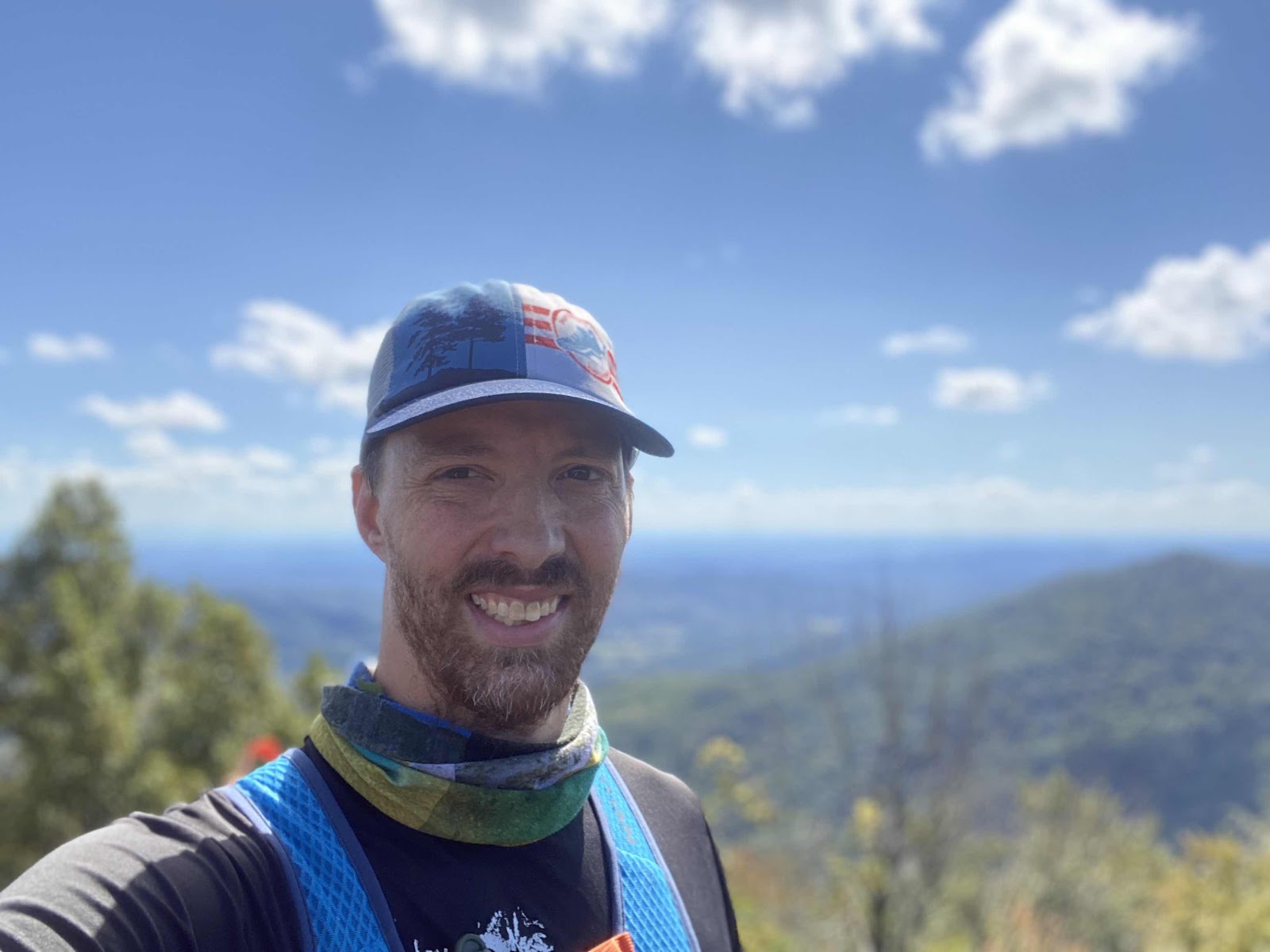
    This past Saturday I made a stop into Frozen Head to run the Challenge Loop. Let me preface by saying - in 2017 I ran BFC with no real trail running experience, and definitely not in BFC shape, yet managed a marathon "finish" because I had been running a lot of miles. 2018, same scenario, got in off the waitlist, not trained up, marathon finish after spending about 2.5 hours on Rat Jaw from 1:00 - 3:30. 2019, got in again, trained for lots of elevation and forgot how to run, after a great start ended with a DNF at the prison. I have made a few trips to the park for training runs as well, so I know the park trails well enough that I knew what to expect. Since I didn't get to run BFC this year, I planned a little detour as part of our travel from Michigan to North Carolina. We sold our house at the end of August and bought an RV to live in full time with our family of 6, for at least the next year (kids doing virtual school, and I work remotely). 
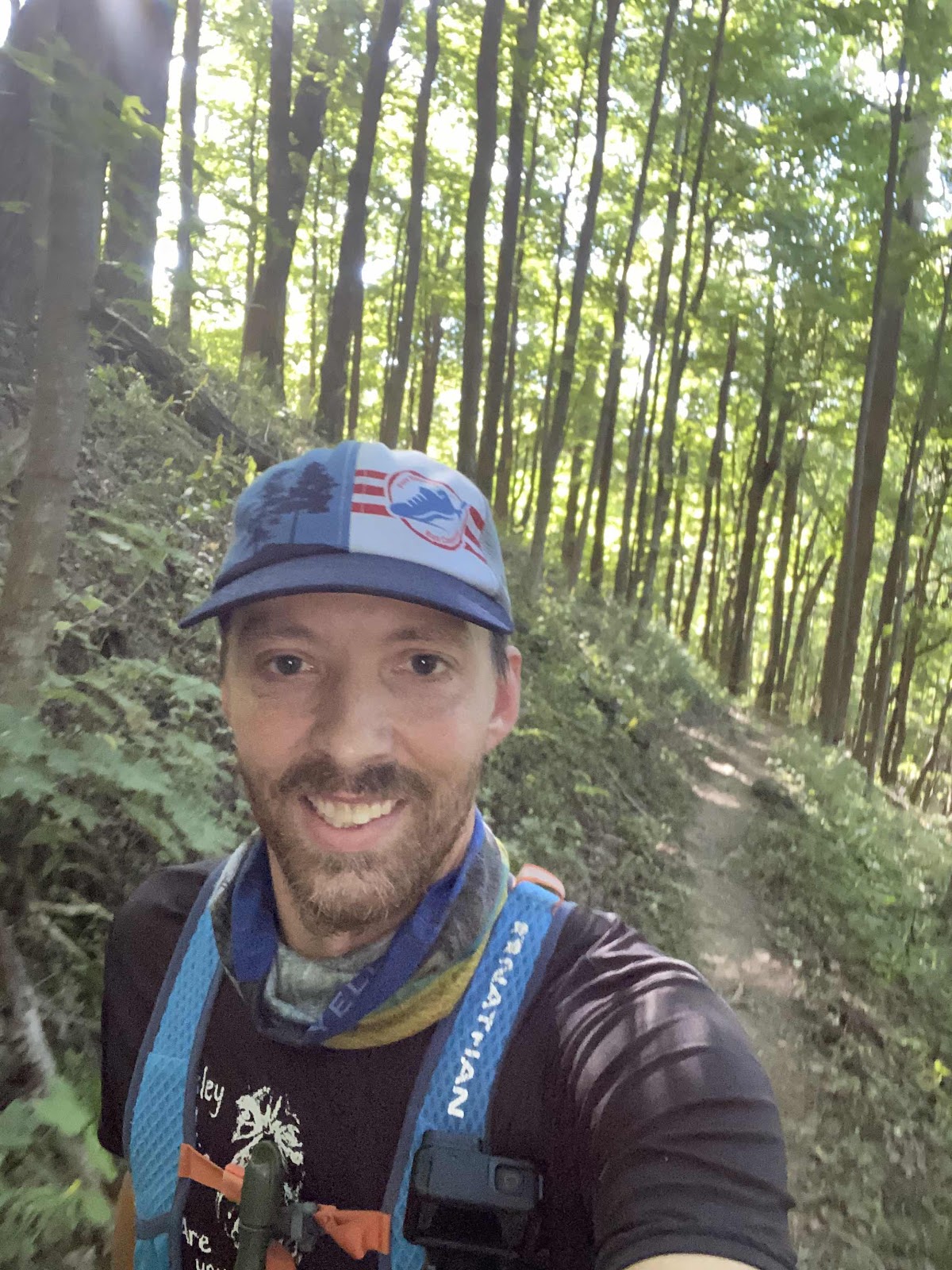
    After boondocking at the Oak Ridge Walmart Friday night, we hit to road to FHSP and I started my loop just after 10:00am. I am running Quest for the Crest 50k on October 17th, so this was going to be my last big training week for that. I wasn't exactly rested with fresh legs, but still felt pretty good overall. I made the first climb up Bird and down to the creek just over an hour, about equivalent to what I did at BFC 2019. The next part of the course up Jury Ridge and Bald Knob is what always kills me. I'm glad I don't know how many switchbacks are on that section, but it feels like about four thousand. I enjoyed the few short sections that are runnable, to give my legs a break from the power hiking. I managed to avoid the temptation at Bald Knob to cut over to the jeep road and call it a day, and continued on to Garden Spot. I got there (what I consider the half way point) just over 3 hours.

    With a steady supply of fun size Snickers and a Honey Bun, I got up to the jeep road to take back to Coffin Springs and on up to the Fire Tower. I was thinking 5hrs 30mins might be doable, but wasn't sure how my legs would hold up for the more runnable second half. Right around Coffin Springs I had my first problem - some cramping in my left hamstring. I knew this was because my leg strength wasn't there to be able to handle very well the 4,000+ feet of climbing to that point. I took a short break - a minute or less - to do some stretching and popped a few more Vitamin-S (Snickers) and continued on to the lookout tower. Once there, I spent a few minutes taking in the view from the top, and also admiring the path through Rat Jaw, happy that I didn't have to go that way today, and also that I will never be a leader responsible for breaking briars to clear the path up the hill.

    All I had left was an easy run down Chimney Top. I was right at 4 hours so I thought 5:30 might still be possible. My cramp kept coming back every time I had to climb, but legs still felt strong enough to run the downhill parts that aren't ridiculously steep themselves. And of course I forgot how many false summits there are on CTT. I have only been on Chimney once before - 2019 BFC - but it was in the opposite direction. I knew Rough Ridge was the last climb, but wasn't sure exactly where it was on the trail. I'm pretty sure I climbed it 4 or 5 times. After I got a little lost around one of the capstones, and my 18th mile took 27 minutes (according to my most likely inaccurate GPS). I knew 5:30 wasn't going to happen. I told myself it was ok to just hike it in and finish with whatever time I get. 

        Then I thought about BFC and my desire to get a finish, and how you have to run when you don't want to. So I kicked my sorry butt into gear and started running down the switchbacks, and wouldn't you know it, I saw a sign for Rough Ridge and still have one more climb to do! Suffered through that and started the last descent to the visitor center. As I was "running hard" (13 minute mile downhill) the only other runner I saw all day flew past me and out of site in a matter of 30 seconds. We did shout some words of encouragement to each other as he passed, and that kept me running to the end. I ran through the parking lot, touched the sign, and finished my run in 6:03:41. Not the time I expected, but all things considered I am still very proud about my performance for the day. I questioned if a similar effort on BFC race day would have ended in a 50k finish this year, but it's better not to waste my time wondering what could have been. I've signed up for the waitlist for BFC 2021 and will be training hard during the next year to make it happen.

Here is a link to my run - https://www.strava.com/activities/4147325434

Here is a link to my amateur GoPro video (only my 2nd time using it) - https://youtu.be/twImYDxScuI


Thursday, October 11, 2018

Training Review

The hay is in the barn! I have completed my self-created training plan for the Marine Corps Marathon.  I have no idea how this race is going to go - it could be a personal best or an epic disaster.  This will be my 6th road marathon and for the first time, I didn't follow a traditional mileage marathon plan.  Instead I created my own time-based running plan.  I was much more flexible with how far my weekly long runs went - most were 2hrs 30mins or less, whereas before I would target several 20 mile run that would take in the neighborhood of 3:30 - 4:00.  I had a goal of somewhere between 6 to 7 hours of training a week, for almost every week. The last few weeks before tapering would approach 8 hours.

I also started doing a lot of heart-rate based running, in lieu of target paces.  That was the main reason that I switched to a time based training plan.  In the past, if I wanted to run 10 miles, but it was 85 degrees and 95% humidity, that would greatly affect my run.  I would either end up running a lot longer than expected so as to not burn myself out, or at a much higher level of exertion to hit a target pace.  So instead I would convert the mileage to a target time based on what my normal "easy" pace is, and then just plan to run that many minutes.  If I got 8 miles or 11 miles in that time didn't matter to me, what mattered was that I kept my HR within my MAF range.

What is MAF?  It is named after Dr. Phil Maffetone and is focused on heart rate based training.  I initially learned about this by reading the book Natural Born Heroes by Christopher McDougal.  The principles are centered around ultra running, however it made sense to me that they could also be applied to "shorter" distances and be beneficial.  The concept is pretty simple - slow down to speed up.  Start wearing an HR monitor and keep you HR within a range that is considered aerobic.  Aerobic means "in the presence of oxygen". This is the type of running you do when you feel slow and comfortable, or at a pace where you can easily hold a conversation without having to take breaths between words. Anaerobic running basically means the opposite - running hard and to the point where you are breathing heavy as your muscles as screaming for oxygen.  This happens when you are doing sprints around a track or fast hill repeats, etc. When running aerobically, your muscles can get enough oxygen from the blood to process the energy in the cells (burning fat in most cases).

Burning fat you say?  For all of my other marathons, I have packed on several pounds.  The increase in running has led to several sessions of "eating all the things", or being HANGRY at 8:30pm and stuffing my face with junk food. Another facet of the Maffetone Method  is focused on your diet, and encourages you to eat a low carb-high fat mix.  When you are running at a low HR, your body is burning fat for fuel, so it makes sense that you would need to replace that fat from what you eat.  This was appealing to me, as it meant eating more eggs and bacon for breakfast, and steaks or burgers for dinner.  It also led to me cutting out a lot of junk food - chips, soda, candy, etc., for quite a while, and I ended up losing around 10 pounds.  I had a lot of fun experimenting with different ways to replace some of my favorite foods, such as the Fat-Head pizza crust recipe - I actually like this better than most pizza places we buy from!  I haven't exactly been as strict as I should be in this area, and have slipped back into some of my bad habits as the training has ramped up, and the cravings are hard to suppress.  After this race is over, I plan on getting back on the wagon.

But slowing down to speed up?? That was a tough pill to swallow.  Everything I have ever known about running was that if you want to run faster, you have to run fast.  The problem with that logic is that running "fast" means you are constantly in your anaerobic state, and have an elevated heart rate. Your heart basically becomes a muscle that is constantly overworked and never has a chance to recover and get stronger. The main idea is that if you get your effort easy - heart rate in your MAF range - your pace will be slower AT THE START.  However, as time goes on and your body gets better trained, putting forth that same effort (read: heart rate) level will yield a faster pace.  Another thing I haven't exactly been strict on was wearing my HR strap to monitor.  I have more kept my runs at a conversational pace, which is close to equivalent to your target MAF HR.

It has been a challenging training cycle for sure.  North Carolina summer months are not friendly to marathon training - routinely high temperatures mixed with high humidity can crush your runs and leave you feeling less than confident.  That's why I am not going into this race with many expectations.  I'm hoping to stay with a low HR for the first half of the race, so the weather will play a big factor into what kind of pace I can maintain.  We haven't yet had the break in the weather for the fall season, although with Hurricane Michael coming through, we are expected to see quite a drastic change in temps next week - right at taper time!

Fingers crossed for good weather and possibly a marathon PR, but if not I'll be thankful for the chance to experience a terrific race.  And always thankful for the physical ability to do something that I love.  Then it's on to the next race.....

Tuesday, October 2, 2018

Numbers

I have an obsession with numbers. When I went to college, I was initially planning on being an accountant.  That quickly changed, however my love of math and numbers has never gone away.  My wife refers to me as the Human Calculator (not sure that really sounds like a cool super hero name) and will often times just ask me a math problem rather than wasting time typing it into her phone's calculator.

Of course that has translated over to my running.  Runners have so much data available to them it can be overwhelming.  Just during the course of a single run, I worry about things like - How many miles have I ran today?  What is my average pace?  What is my current pace?  How long is this interval?  What is my current heart rate? HOW MANY MORE MAILBOXES UNTIL THE TOP OF THIS HILL?!?!?  That's just during a run.  When I get home, I then analyze the crap out of my run on Strava.  I look at mile splits, my speed on different segments compared to last time (or the overall leaders), my fastest pace (sometimes when I sprint the end of the run), my total elevation gain, the list goes on and on.  And lastly, there are cumulative numbers that I'm always thinking about. How many more miles can I fit in this week? Will I get more than last week?  Am I on track for my monthly goal?  If I increase by 10% each week, how many miles will I end up with for the year?

My current fixation is on my yearly mileage - I have a goal of cracking 2,000 miles in a year for the first time in my life.  I currently sit at 1,735.4 for the year, needing 264.6 more miles for the year, over the course of 92 days, so I need to average..... wait, there I did it again! You can see my problem pretty clearly.  I have such a problem, that I recognize exactly what I am doing, and yet I am still not able to let it go, and I must tell you that I need 88.2 miles per month, or 2.88 miles a day to reach my goal.  If I stay on my current track of 6.36 miles per day, I will hit 2,000 in just 41 days (November 10th).  At that point I will probably decide to shoot for 2,200 or something in that range - 2222 sounds good!

I will say that the problem with the mileage numbers has actually worn me down quite a bit mentally.  My body is holding up well because I have been smart about doing a lot of runs at an easy, conversational pace.  I've taken a slow, cautious approach to building up my mileage, never increasing by more than 10-15% a week.   I have also done quite a bit of interval run-walking - it still all counts as mileage, just like if you do intervals at a race!  I think I won't be chasing a mileage goal next year so I don't have to have that cloud looming over my head all year. 

However, today I signed up to attempt the Barkley Fall Classic 50k again next year.  It is a lottery and it looks like I'll have maybe a 25% chance of getting selected.  But I know how the waitlist for this race works, and many people will drop out before the race.  So I am going to plan a full year around training for that race as if I'm in it.  I want to be ready even if I don't get notice until just a few days before the event.  My training plan will not focus as much on mileage this year, although there will be plenty.  I will be more focused on strength training, climbing, and just general "embrace the suck" activities.  My training goal numbers will be set around total elevation gain, which will just be a new obsession I have to pay attention to all year.

Why am I a slave to numbers like this?  There have been a few times that I have just left the house without my watch - or had the battery die in the middle of a run - and those have been some of my most enjoyable times.  Sometimes I wish I could "lose" my watch and not have all that data at my fingertips.  Although I would later just obsess over how many numbers I missed out on...

Tuesday, September 25, 2018

My love-hate relationship with training

I have the post-race blues after the Barkley Fall Classic.  It always happens, especially after a race as awesome as that one.  I think it is because training is just so boring.  I often times wonder about the insanity of sticking to a training schedule - a little number in an Excel spreadsheet that dictates everything about my running life.  If it were up to me - and time and money wasn't an issue - I would just do a few easy jogs each week and run a race every weekend.

You wouldn't think monotony would be the case.  There are so many variables that revolve around training runs. Early morning, lunch time, or evening? Hill repeats, track, route around town? Am I going to run intervals?  Will it be speed intervals with a slower jog recovery, or an easy run pace with a walking recovery?  Do I want to run a negative split run, or an even pace?  Should I run by heart rate or not? Do I want to push hard on the uphills, push hard on the downhills, or keep an even effort level through the entire run?  Do I want to run alone or with a group?

Despite my tendency to do a wide variety of these running styles, after a few weeks I tend to feel like I'm in a rut.  I wake up and have no desire to go run.  I think of how dumb it is that I'm setting my alarm at 4:26am to go do a training run - because that is the only time that works well for my schedule.  I think about my college self, who would often times still be up from the night before at this time.  I think of my young parent self, who would wake up all hours of the night with our children and be exhausted the next day.  I think of those same kids, who now when they wake up "early" they are still getting up more than 2 hours later than me.  And yet, I am choosing to do this!  What is wrong with me?

I look at the light posts and can literally see the humidity in the air.  I think how much training through the North Carolina summer sucks, and I wish fall would hurry up and get here.  I've read articles that say when the dew point is over 70, you should either have extremely low expectations for your run, or consider skipping your run altogether and wait for it to be better conditions.  The alternative to the high humidity is to wait until later in the day, when the humidity might drop a bit but then the temperature climbs up to the 90s or higher.  It feels like we have been dealing with this weather since March, and it seems it will never end.

I think of the absurdity of driving my car 15 minutes each way to go run with a group of like-minded people, which most likely will split up because everyone is running their own pace and I may end up left behind to run in the dark alone.  I think about how it would be easier to just run around the neighborhood for the 100th time, but then I might set the alarm for later, like 5:30am.  That generally turns into "why not wait until lunch?", and I end up working through my lunch hour, which turns into an exhausting day and an inevitable skipped training day.  So we are back to the car and driving down the road when everyone else is still asleep, and wondering what I'm doing with my life. What is wrong with me?

Then it happens. After getting out of the car and all geared up with lights, the feet start slowly moving.  I think this might not be so bad, after I work out some of the kinks from yesterday's run or rest.  I usually take the first mile or so pretty easy, just to let the heart rate slowly rise and get my legs loosened.  Today was a 15 minute warm up before the group meetup at 5:30.  I join another dozen runners for the run club's "run of the day."  Today is a 4.4 mile road run with rolling hills, with a mile or so where it flattens out. The pace felt easy, yet I was able to keep up with a group of runners.  We were chatting about races and other things so the hills passed quite easily.  As the run went on, the pace quickened yet my legs still felt strong.  Heart rate and breathing was under control.

Suddenly, my previous hate of training becomes a love of training.  Complaining about the weather seems ridiculous, because I know putting in hard efforts in hard conditions will pay off in spades when the weather changes (hopefully by the time race season comes around).  Every training run is like a drop in a bank account, and come race day when it is time to make that withdrawal I want to have as much as possible built up.  Waking up early is a logical choice - I always feel better after a run and now I will have this feeling for several hours throughout my work day.  And I will be able to relax in the evening hanging out with my wife and playing with my kids.  Who needs sleep anyways?  The route was the same as last week, but that also makes it familiar, so I know what is to come.  It is a great feeling to know when I need to back off a bit and when I can push.  And if I had just ran alone in the neighborhood, I would not have had the encouragement of other runners, my friends who will push me to reach my goals as they strive to reach their own.  I enjoy the quiet car ride home to cool off and reflect on how great of a run I just had.

Do all training runs end this way? Of course not, it can't always be all sunshine and rainbows.  Sometimes I feel like "everything hurts and I'm dying" and I continue my hatred of the training run.  But NOT TODAY! That will have to wait for some other time...